Before a first trip that involves hot water in Japan, the etiquette gets covered everywhere—wash first, tattoos, what to do with your towel. The budget rarely does. And the reason it’s hard to pin down isn’t that anyone is hiding it: a neighborhood sento, a day-trip onsen facility, and a night at a ryokan aren’t priced the same way at all. They’re three different systems, and knowing which one you’re looking at tells you how much of the total you can actually predict before you go.
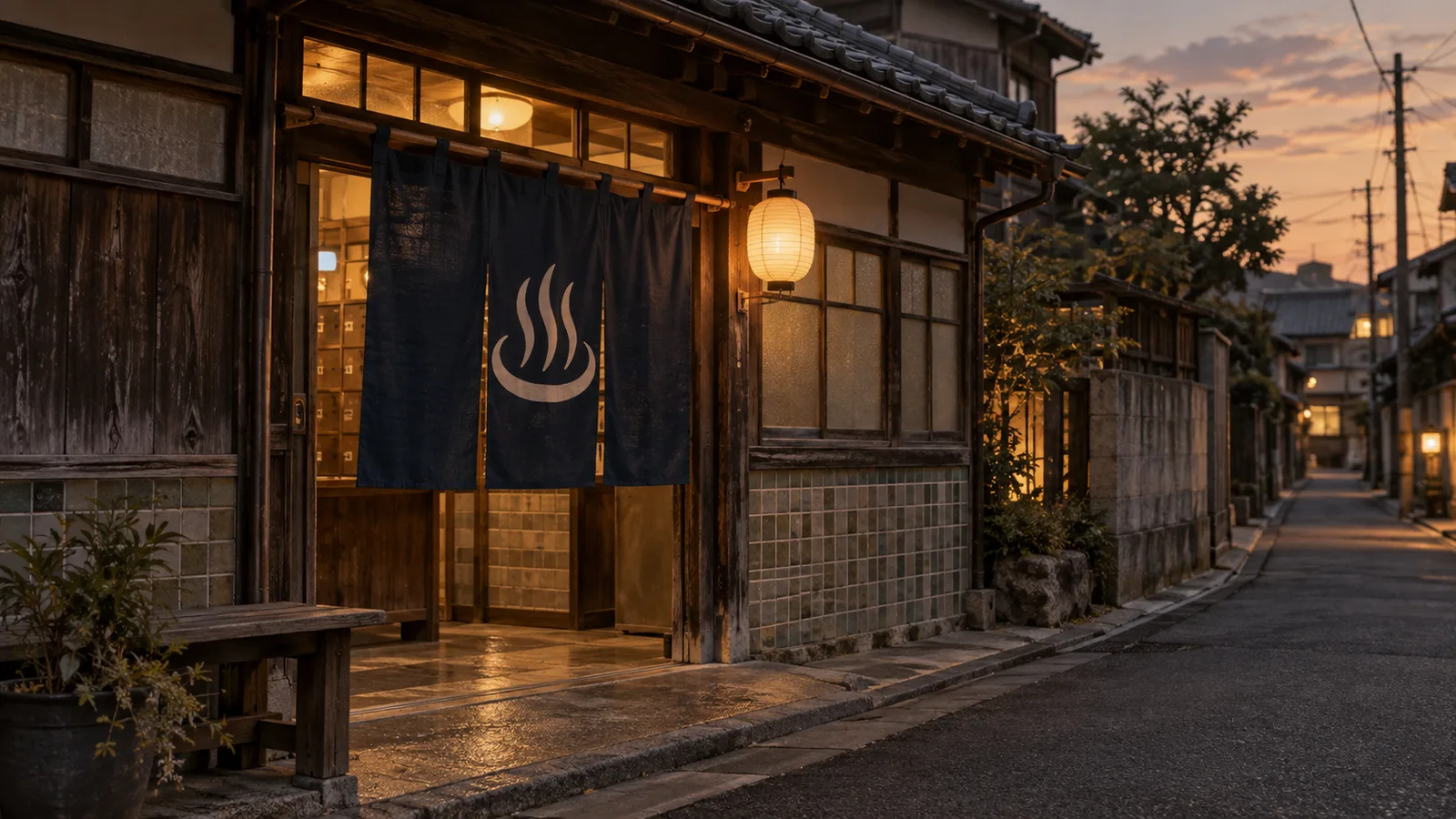
Three prices, three systems
A neighborhood sento is the one you can budget for exactly, because nobody sets its price alone. Japan’s national Price Control Order authorizes each prefectural governor to cap what public bathhouses can charge, and in Tokyo every sento charges the same capped amount as a result. As of August 2026 that cap is 600 yen for anyone 12 and up, 200 yen for ages 6–11, and 100 yen under 6—and it isn’t set once and left alone. The Tokyo Public Bathhouse Countermeasures Council reviews bathhouse accounts and meets roughly twice a year to decide whether the cap still covers what it costs to keep the water hot. Walk into any sento in the prefecture and that’s the number, full stop. Other prefectures run the same kind of system under their own governor’s cap, so the exact yen figure changes by region, but the logic—one publicly reviewed price, not each shop setting its own—travels with it.
A day-trip onsen facility (often called a super sento or a higaeri onsen) is the opposite. Nothing caps what it charges. These are larger commercial facilities—multiple bathing rooms, saunas, sometimes a restaurant or rest area—and each one sets its own entry fee based on what it offers, which is why prices swing widely between one facility and the next in ways a plain neighborhood sento’s price never does.
Here’s what that looks like as an actual ticket rather than a description: Tenseien, in Hakone Yumoto and within day-trip reach of Tokyo, sells day-use admission rather than being a capped-price neighborhood sento, so the price is whatever the facility sets. One thing worth knowing before you book: that ticket covers general admission only. Tenseien also keeps private baths, but those are arranged and paid for on site as a separate charge, not bundled into the ticket, and pricing can change—check the current admission price and any private-bath availability on the booking page before you go. One condition to know before you buy: Tenseien’s official day-use page turns away anyone with a tattoo, or even a tattoo-style sticker (checked September 28, 2026), so this ticket won’t work if you have one.
See the Hakone Yumoto day-use ticket on KKdayThis page contains affiliate links. If you book through them, AHH, JAPAN may earn a commission at no extra cost to you.
A ryokan stay is priced differently again: per person, per night, not per room. A quoted rate of 25,000 yen means 25,000 yen for one guest, based on two people sharing a room—a couple pays 50,000 yen together, not 25,000. Almost every ryokan rate bundles dinner, breakfast, and unlimited use of the property’s own bath into that one number (the standard plan is called ippaku-nishoku, “one night, two meals”), so a ryokan quote is doing more work than a hotel room rate: it covers the same math a Western traveler would otherwise do separately—dinner out, breakfast out, and a bath entry fee—on top of the room.
The line item that isn’t in the online total
Here’s the part that catches people who did check the price beforehand: almost every hot-spring stay in Japan carries a separate bathing tax, called nyuyokuzei. It’s a local tax authorized under Japan’s Local Tax Act—the municipality where the hot spring sits sets the rate and keeps the revenue, though it’s the ryokan or hotel that actually collects it from you and passes it on to city hall. The traditional standard rate is 150 yen per adult per night, though some well-known hot-spring areas have raised it; the town of Higashi-Izu, for one, moved to 300 yen in 2025. It’s added to the bill at check-in or check-out, and because it’s a local tax rather than part of the room rate, many booking platforms don’t fold it into the total shown before you book. The fix isn’t complicated—budget an extra few hundred yen per person per night if you’re staying somewhere with its own hot spring—but it’s worth knowing the line exists before you’re standing at the front desk being asked for cash you didn’t plan for.
A private bath you can reserve for just your group (kashikiri-buro) is almost always billed on top of the room rate, even at a ryokan that has one. So is a locker or a rented towel at some sento that don't include one. Neither is hidden exactly—they just aren't folded into the headline price the way a ryokan's dinner and breakfast are.
For more on reserving one of those private baths once you’re actually at a ryokan, see what a kashikiri-buro is and how booking one works.
What you don’t have to budget for
You don’t need to buy a towel before you go. Most sento rent one at the front desk for a small fee if you didn’t bring your own, and every ryokan supplies one in the room—there’s no towel-shopping trip to add to the total.
You also don’t need to set aside money for tipping. Service isn’t an optional add-on you calculate afterward the way it is in some countries—it’s already built into the room rate and the bathing fee, and tipping on top of it isn’t expected at a sento, a day-trip onsen, or an ordinary ryokan. (The one narrow exception some travelers hear about is kokorozuke, a small cash gift some guests give a personal attendant at a high-end ryokan for exceptional individual service—it’s optional, not a norm, and irrelevant to a first, ordinary trip.)
The honest limit here
This page gives you the structure, not a live price list. The sento cap changes by prefecture and gets revisited on its own schedule; day-trip onsen prices are set facility by facility and change whenever the facility wants; ryokan rates move with the season and the room grade, sometimes by tens of thousands of yen between a weekday in June and a Saturday in cherry blossom season. Whatever number you see on a booking page is the one to trust for that date—this page is for knowing what kind of number you’re looking at, and what else might land on the bill beside it.
Three systems, one soak. Ahh…
Curious about YUGE, the character guiding you through this site? Meet YUGE—and find a few small ways to bring that calm home—on the YUGE page. Once the budget makes sense, our guides to what a ryokan actually is and how to book one in English cover what happens next.
Some editorial images in this article were AI-generated and do not depict specific venues.
Sources
- Tokyo Metropolitan Government — Press release on the 2026 regulated maximum sento bathing fee
- Tokyo Metropolitan Government (Consumer Life) — How the sento fee cap is determined by the Tokyo Public Bathhouse Countermeasures Council
- Ministry of Internal Affairs and Communications — Nyuyokuzei (bathing tax), standard rate and legal basis
- Higashi-Izu Town — Notice of nyuyokuzei rate increase to 300 yen (effective 2025)
- Japan National Tourism Organization (JNTO) — Tipping in Japan, including the kokorozuke custom
- Tenseien — Day-trip bathing rules (Japanese)