Most “best places to see cherry blossoms in Kyoto” lists tell you where to walk during the day. They don’t tell you where to sleep — and during sakura season, that decision gets harder than usual, because the areas fill up months ahead and each one trades off differently between the blossoms, the crowds, and how far you’ll be dragging a suitcase.
Kyoto’s bloom is short, and it moves the whole city at once
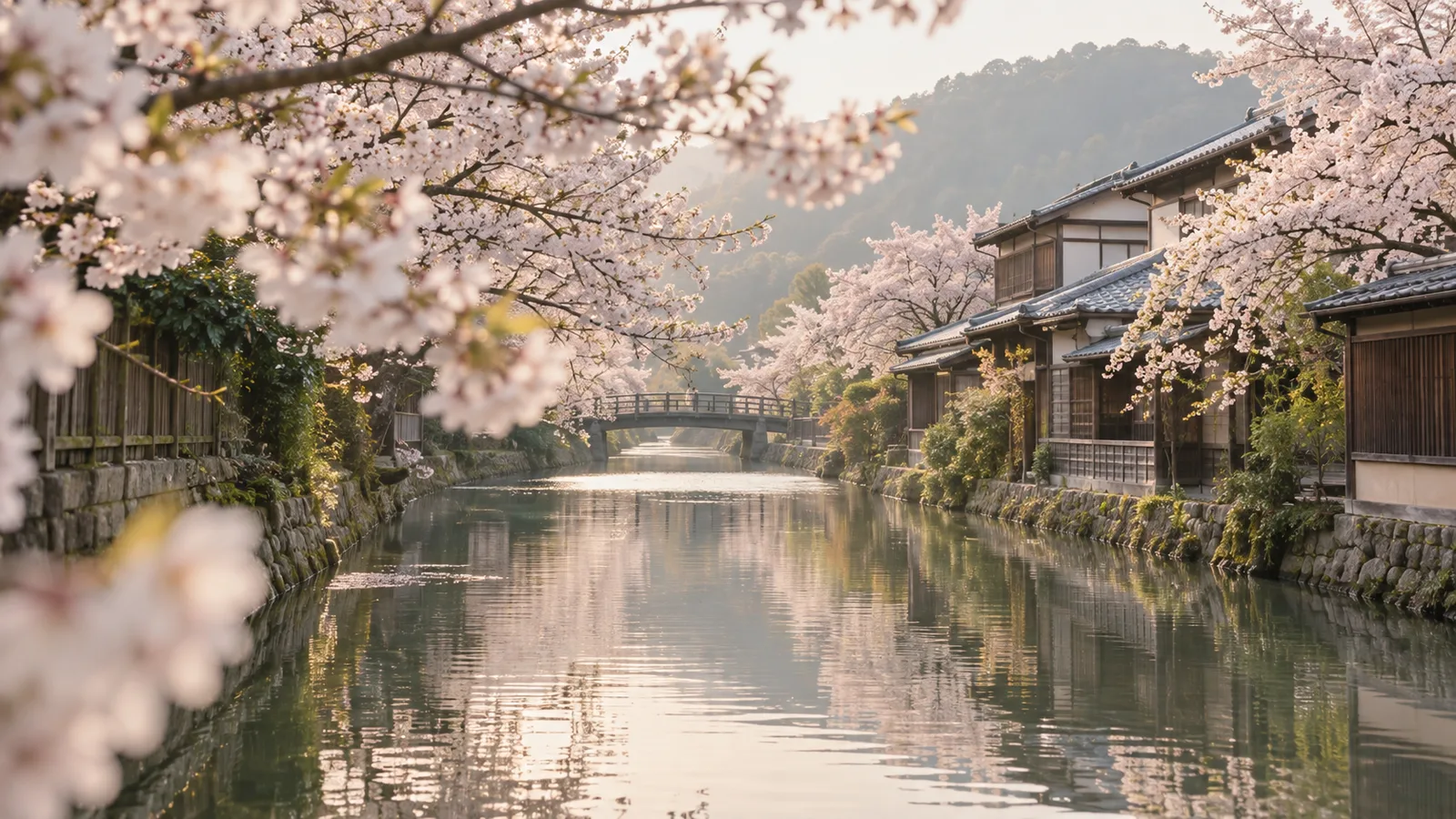
Kyoto’s cherry blossoms typically open in the last week of March and peak within the first two weeks of April, though the exact dates shift with that winter’s weather — Kyoto Prefecture’s official tourism guide has forecast opening around March 25 and full bloom around April 2 in a recent year, while flagging that a warm February can pull the whole window earlier. That short, weather-dependent window is exactly why area matters more here than in a typical Kyoto trip: for about ten days, everyone in the city is trying to be near the same handful of rivers, temple grounds, and canal paths at the same time, and where you’re staying determines whether that means a five-minute walk or a bus transfer through a crowd.
The city doesn’t have one blossom neighborhood — it has several, each built around a different kind of water. The Kamo River cuts through downtown, the canal along the Philosopher’s Path runs through Higashiyama, and the Hozu River curls around Arashiyama on the western edge of the city. Picking an area means picking which of those you want closest, and what you’re willing to trade to get there.
The four areas below are ordered by distance from Kyoto Station, where most cherry blossom trips into the city begin: the easiest arrival first, and the area that pulls furthest away from the rest of Kyoto last.
Kyoto Station area — the easiest arrival
If your Shinkansen or flight lands with connections to plan around, or you’re moving on to Osaka, Nara, or Fushimi Inari partway through the trip, staying near Kyoto Station removes the most friction. It’s the hub for the JR lines that reach Arashiyama and the city’s other blossom spots, so you’re not locked out of anywhere — you’re just starting each day with a train ride instead of a walk.
This isn’t the area for you if the point of the trip is walking out the door into blossoms — the station area itself has little cherry blossom scenery, and you’ll be commuting to see it like everyone else arriving that day.
One real example near the station: Ryokan Ginkaku Kyoto, a three-minute walk from Kyoto Tower. It’s one property, not a personal recommendation — useful for seeing what a station-area booking looks like before you compare it against the others below.
See Ryokan Ginkaku Kyoto on KlookThis page contains affiliate links. If you book through them, AHH, JAPAN may earn a commission at no extra cost to you.
Downtown — Shijo and Kawaramachi
A short ride from the station, downtown Kyoto sits right along the Kamo River, one of the city’s best-known and easiest blossom walks — the riverside path runs for kilometers and needs no admission, no timed entry, and no temple grounds to navigate. This is also where most of the city’s restaurants, shops, and nightlife are, so evenings don’t depend on your ryokan’s kitchen.
This isn’t the area for you if you want a quiet, temple-adjacent atmosphere in the evening — downtown stays busy and commercial well after the blossom crowds along the river have thinned out.
One real example downtown: Seikoro Ryokan, a four-minute walk from Kawaramachi Street and the Kamo River path. Again, one property rather than a personal pick — a way to see what a central, riverside-adjacent booking includes before you weigh it against the others.
See Seikoro Ryokan on KlookThis page contains affiliate links. If you book through them, AHH, JAPAN may earn a commission at no extra cost to you.
Gion and Higashiyama — closest to the temple walks
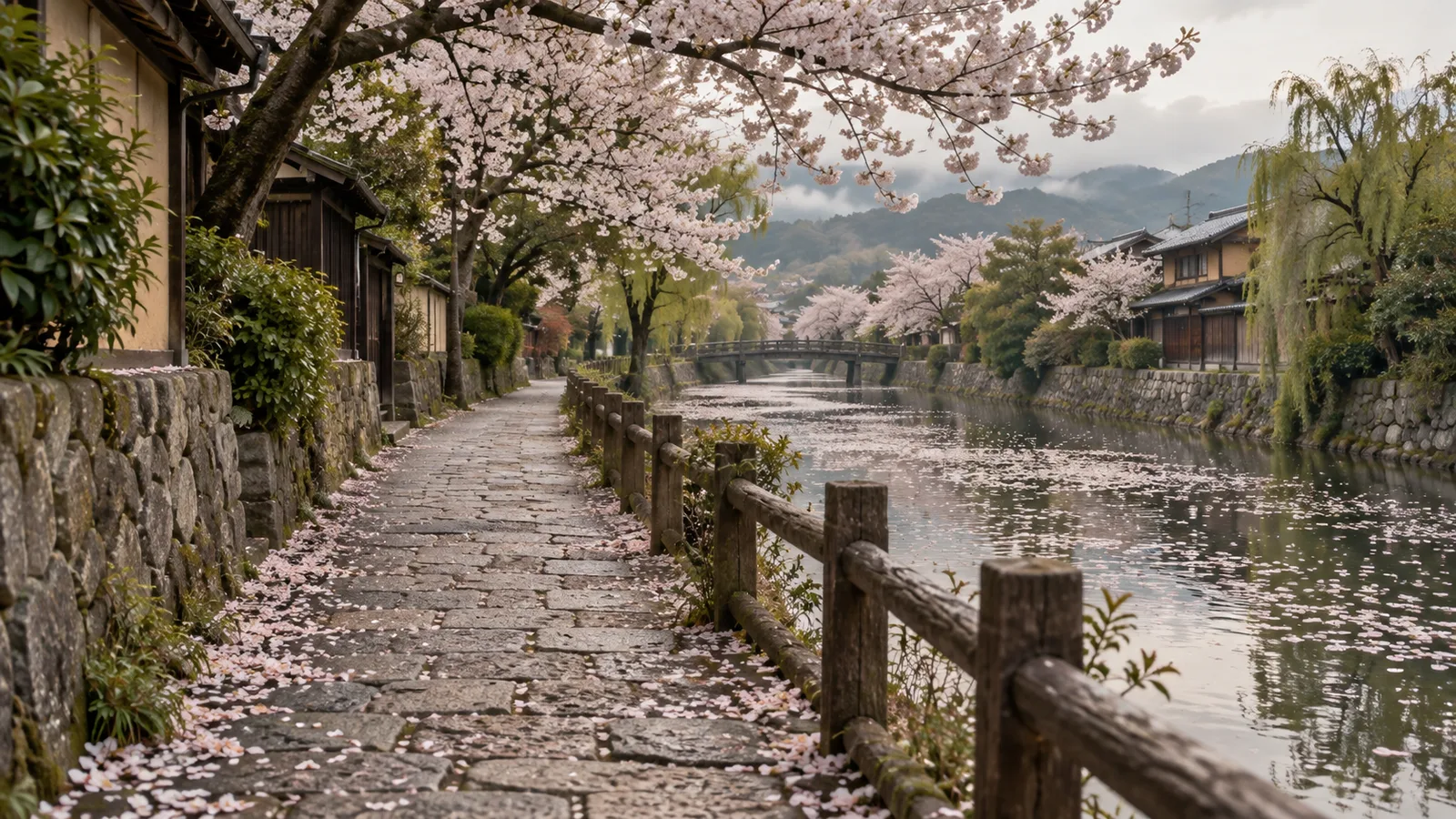
Gion and the wider Higashiyama district put you within walking distance of Yasaka Shrine, Kiyomizu-dera, and the canal-side Philosopher’s Path — the temple-grounds side of Kyoto’s blossom scenery, as opposed to the open riverbank downtown. The advantage of sleeping here specifically during sakura season is timing: the narrow lanes around these temples are calm in the early morning and become genuinely crowded by mid-morning, so staying inside the neighborhood means you can be out walking before the day-trippers arrive from elsewhere in the city.
This isn’t the area for you if you need late-night restaurant options within walking distance — Higashiyama quiets down early compared to downtown, and many ryokan here expect dinner on-site.
One real example in Higashiyama: Kyoto Ryokan Gion Sano, a five-minute walk from Yasaka Shrine and about a kilometer from Kiyomizu-dera. It’s one property, not a personal pick — a way to see what a Higashiyama booking looks like before searching for one that fits your own dates.
See Kyoto Ryokan Gion Sano on KlookThis page contains affiliate links. If you book through them, AHH, JAPAN may earn a commission at no extra cost to you.
Arashiyama — a different river, a quieter evening
Arashiyama sits on the western edge of the city, where the Hozu River curls beneath forested hills and the Togetsukyo Bridge — a distinct scene from the Kamo River downtown, and one of the most photographed blossom views in Japan. Staying here means falling asleep after the day-trip crowds have taken the train back into central Kyoto, and waking up to the bridge and riverbank before they return.
This isn’t the area for you if you want easy evening access to the rest of Kyoto — Arashiyama is a 15–20 minute train ride from downtown, so an evening out elsewhere in the city means factoring in the ride back.
One real example in Arashiyama: Ranzan Hotel, an easy walk from both Tenryu-ji Temple and the Togetsukyo Bridge. It’s one property, not a personal recommendation — useful for seeing what an Arashiyama booking includes before you compare it against the areas above.
See Ranzan Hotel on KlookThis page contains affiliate links. If you book through them, AHH, JAPAN may earn a commission at no extra cost to you.
What you don’t need to do
You don’t need to stay in Arashiyama to see it. It’s a 15–20 minute train ride from downtown or the station area, which means you can visit for a morning and sleep somewhere with more restaurants and a shorter last train home. Arashiyama earns its place on this list only if a quiet evening by that particular river is worth the tradeoff on its own.
The one thing that doesn’t change by area
Wherever you stay, book early. Kyoto hotels and ryokan routinely book out weeks in advance once cherry blossom season is underway, well before the bloom forecast is reliable enough to plan around — the areas above are worth comparing precisely because you’ll likely be choosing one before you know exactly which week the blossoms will peak.
Once you’ve picked an area, here’s how to actually book a ryokan in English, and if the exact booking window is still an open question, here’s the timeline cherry blossom season adds on top.
Pick the water you want closest, and the rest of the trip follows. Ahh…
Some editorial images in this article were AI-generated and do not depict specific venues.