“Self-care” often gets sold as a product or a routine to buy into. In Japan, the version that shows up every evening is simpler than that: a bath, taken slowly, at roughly the same time each night. This guide isn’t about recreating an onsen at home—it’s about the smaller habit underneath it, and how to borrow it for your own evenings.
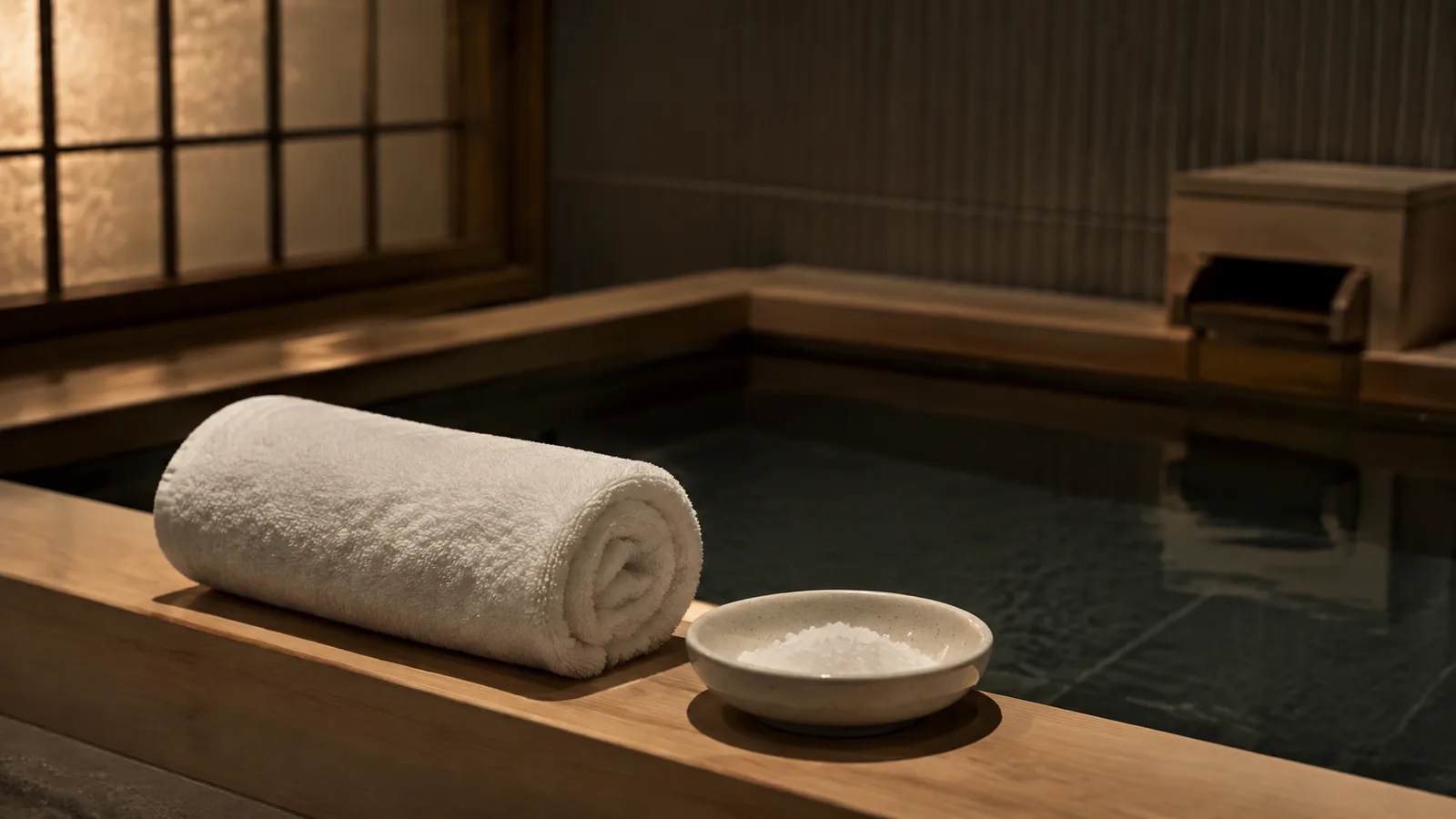
A daily reset, not a spa treatment
In many households in Japan, a hot bath (ofuro) at the end of the day is just what people do, not a special occasion. On top of that everyday habit, Japan’s tourism board notes that public bathhouses (sento) sometimes add seasonal, themed baths on certain days. The self-care value isn’t in any single product or technique—it’s in the repetition: the same unhurried pause, most evenings, marking the day as finished.
That’s a useful frame if “self-care” has started to feel like one more task. There’s no routine to perfect here, no set of products to buy. The habit is the bath itself, done at a pace that isn’t rushed.
A simple evening bath ritual
The habits that make this work aren’t really about the bathroom itself—they’re about protecting a few minutes around the bath as a genuine pause, rather than a step to get through on the way to bed.
- Anchor it to a consistent time, not a fixed checklist. The value comes from doing it most evenings around the same part of the night, not from following the exact same steps every time.
- Let it mark the end of the workday, not the start of bedtime prep. Treat the bath as the shift between the two, rather than folding it into a longer routine of screens, chores, and errands.
- Don’t turn it into one more thing to get right. There’s no ideal temperature or soak length to chase—if it feels calming, it’s working.
- Give yourself permission to skip a night. A habit that has to happen every single evening turns into pressure instead of rest.
- Pair it with one small after-bath habit. A few minutes with tea, a short stretch, or just drying off slowly extends the calm instead of cutting it off at the tub.
For the room setup and the washing sequence itself—how the space, the light, and the pace of getting in and out come together—our guide to bringing the bathing ritual home covers that ground in detail. This routine works alongside a standard Western tub just as well.
This is a wind-down habit, not a medical routine. It won't treat a health condition, and it isn't a substitute for medical advice. If the water runs very hot, Japan's tourism board recommends stepping out for a break now and then—worth keeping in mind at home too.
Seasonal baths worth knowing
Part of what makes bathing in Japan feel like a ritual rather than a chore is that it marks the calendar. A few public bathhouses still offer themed baths on certain days, and two of the most widely known are tied to specific dates rather than being available year-round.
Yuzu-yu
Around the winter solstice (late December), whole yuzu citrus are floated in the bath. The custom is old, and the fragrance is said to ward off colds—a folk belief rather than a medical claim, but a genuinely lovely-smelling one.
Shoubu-yu
Around May 5th (Tango no Sekku, now Children's Day), some baths float Japanese iris leaves. The fragrance is traditionally believed to ward off misfortune.
Neither is something you can book or plan a trip around specifically—they show up at participating sento on or near the date, more as a seasonal flourish than a fixed attraction. If a citrus or herbal bath sounds appealing, floating a few slices of a citrus fruit you already have in your own tub borrows the idea without needing to time it to the calendar.
Making it a regular rhythm
The easiest way for a habit like this to stick is to keep it small enough that skipping a night doesn’t feel like failing. Most evenings, not every evening. No routine to perform, no products required beyond what you already use. The bath itself, taken slowly, is the whole habit.
That stays true at home: there is nothing here to buy. But the habit does have a public form in Japan, and it’s the part that’s hardest to picture from your own bathroom—places built so that the after-bath hour is the longer half. Solaniwa Onsen in Osaka is one you can book in advance in English: you change into a yukata, move between nine kinds of bath including an open-air one fed by the natural spring, and then stay as long as you like in the garden and the recliner area. Two things to be clear about: this is the elaborate, day-out end of Japanese bathing rather than a neighborhood bath, and the body care menu and the private outdoor rooms are booked and priced separately from admission. The booking page doesn’t state a tattoo policy, so check with the facility if that applies to you.
See Solaniwa Onsen in Osaka on KlookThis page contains affiliate links. If you book through them, AHH, JAPAN may earn a commission at no extra cost to you.
Take it slow. Ahh…
If you’d like to go further—recreating the fuller washing sequence and understanding how a Japanese bathroom is laid out—see Home Onsen 101. And for the etiquette of taking this ritual to a real sento, onsen, or super sento, our beginner’s guide to Japanese baths covers what to expect.
Some editorial images in this article were AI-generated and do not depict specific venues.