A soak in a Japanese onsen has a particular unhurried feeling, and it’s natural to want a little of that at home. You can’t move a hot spring into your bathroom, but the part that makes an onsen feel calm isn’t only the water—it’s the order you do things in, and the pace. This guide walks through what actually travels home, and what doesn’t.
What travels home, and what doesn’t
Start with the honest limit. In Japan, “onsen” is a legal term, not a mood. Under Japan’s Hot Spring Act, water only counts as onsen if it rises from underground and either reaches at least 25°C at the source or contains a minimum concentration of certain dissolved substances listed in the law. A home bathtub filled from the tap doesn’t meet that definition, and no bath additive changes it.
So a home version isn’t an onsen, and it isn’t a treatment for anything. What you can borrow is the ritual: washing fully before you get in, soaking slowly with nothing to do, and treating the bath as a pause between the day and the evening rather than a task. That part carries over to any bathroom.
The ritual is a sequence, not a place
The thing that makes a Japanese soak feel unhurried is the order it happens in. Boiled down for a home bathroom, it’s three moves.
Get clean first
Shower or wash at the tap until you're properly clean, then rinse. Nothing about getting clean happens in the tub.
Get in with nothing to do
Lower yourself into clean water and sit. No scrubbing, no phone, no timer you're watching. Just warm water and a few minutes.
Come out gently
Pat yourself dry before you leave the room, so the warmth lingers and you're not rushing straight back to the cold.
The one rule doing most of the work here is the first one: at a Japanese bath you’re already clean before you touch the water, so the soak is only ever a soak. Everything else—keeping a towel out of the water, tying long hair up—follows from wanting the water to stay pleasant to sit in.
How a Japanese home bathroom is arranged
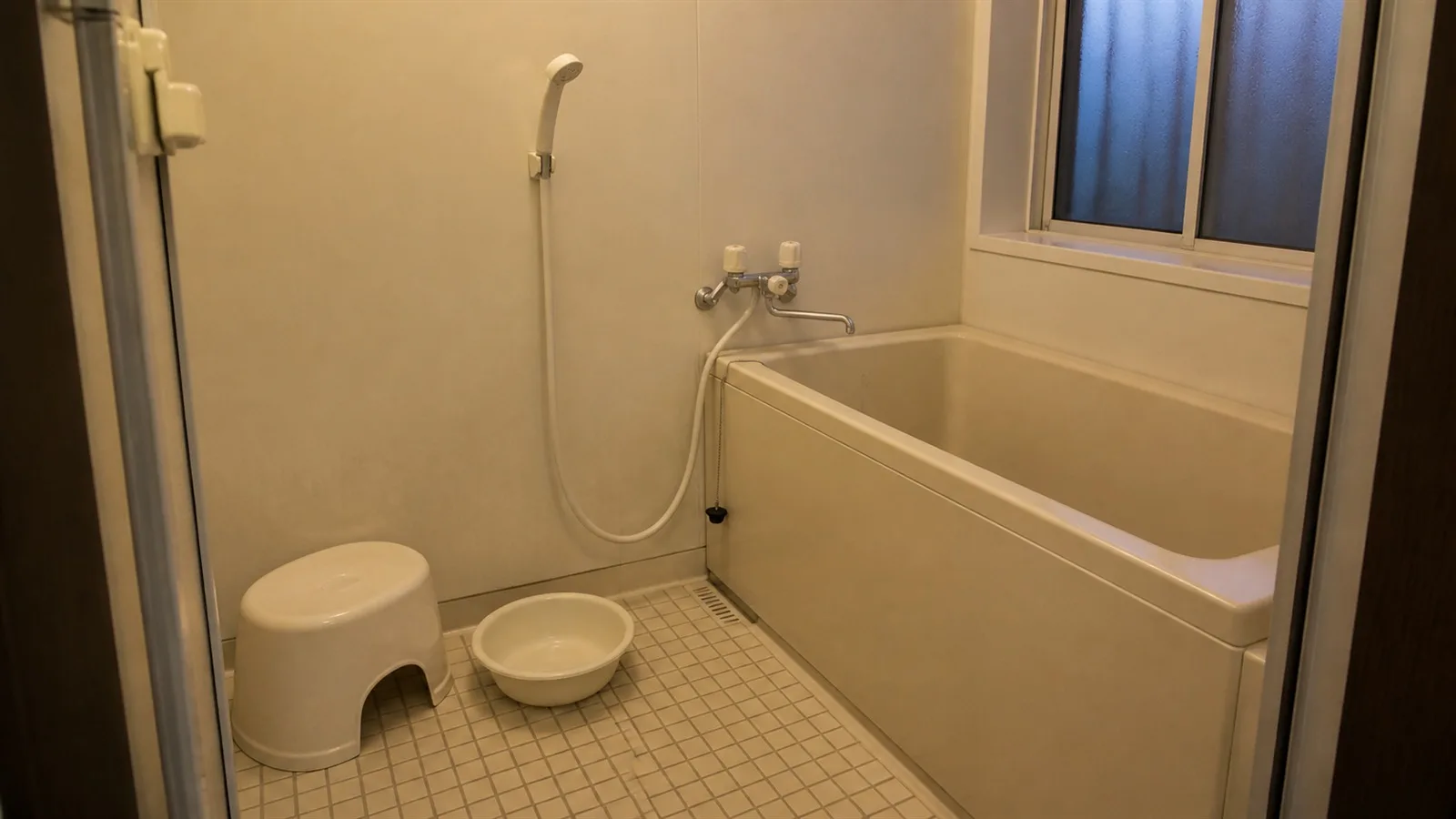
A typical Japanese bathroom is built around this order. The washing area—a hand shower, a low stool, and a small basin—sits next to the tub, not in it, and the whole room is designed to get wet. The tub itself is often deep and short, designed for sitting upright with the water up to your shoulders rather than lying down.
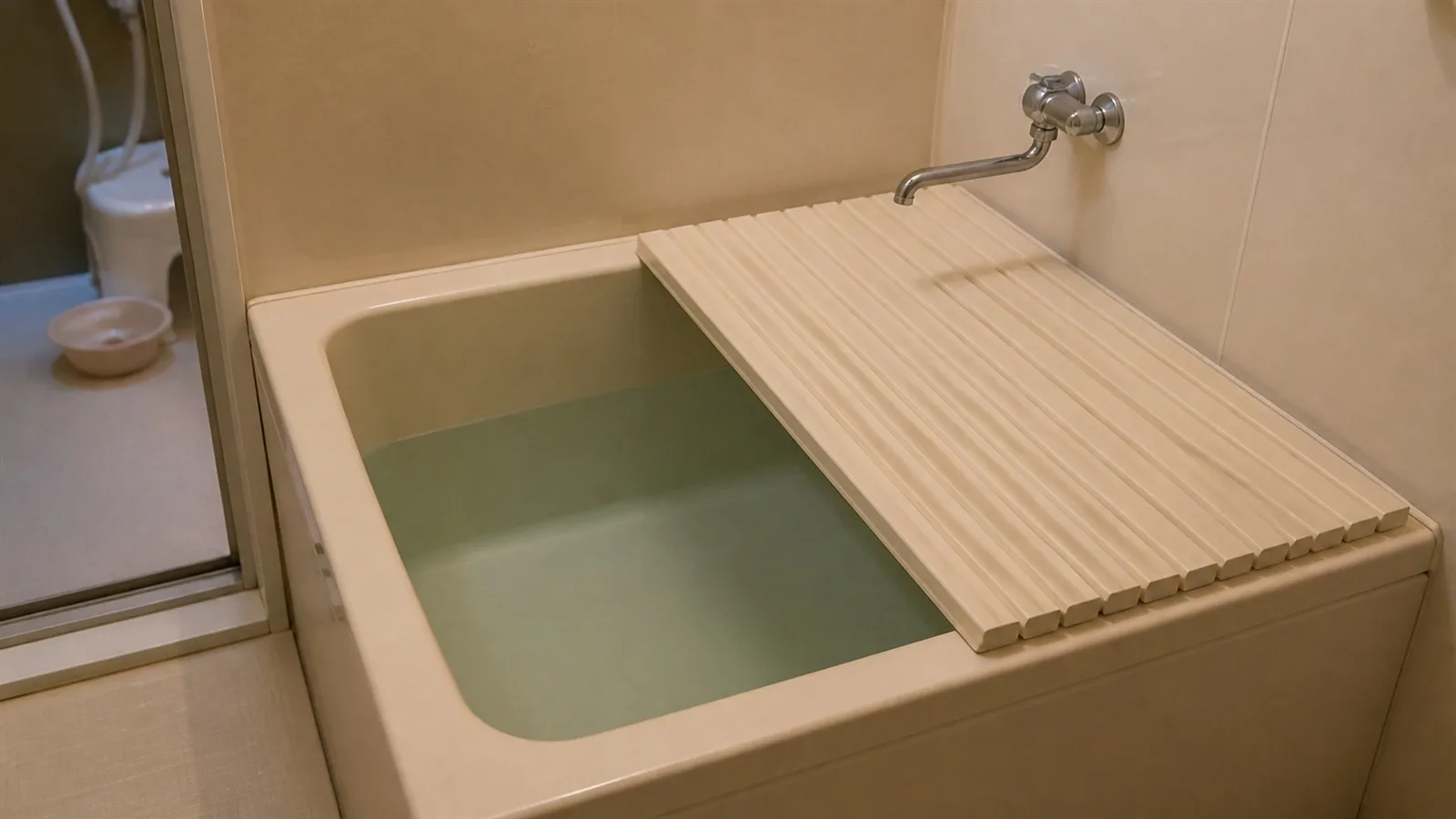
Many households also keep a lid on the tub between people so the water stays warm, and reheat the same water rather than refilling, since heating a full tub uses a lot of energy and time. If you’re recreating this with a standard Western tub, you can’t copy all of that—but you can copy the essentials: wash before you get in, and keep the water clean enough that sitting in it feels inviting.
A home soak can recreate the pause and the sequence. It isn't an onsen, and it isn't a health treatment. Japan's tourism board suggests taking frequent breaks out of the water in a very hot bath; the same sense applies at home.
Setting the scene
The water is only part of it. A few small choices do most of the work:
- Warm the room first, so stepping out isn’t a shock.
- Lower the light. A single lamp, or nothing but the light from the hallway, is plenty.
- Leave the phone in the other room. The point is to have nothing to check.
- Keep it short. A Japanese soak is usually shorter than a long Western-style lie-in, often with a break partway through. Get out while it still feels good.
- Scented salts, if you like them. Plenty of Japanese households add a bath salt for color and scent. Enjoy it as a small pleasure, not as medicine.
Nothing above needs buying, which is most of the point. But there’s one thing a home bathroom genuinely can’t do, and it’s the honest limit at the top of this page: real hot-spring water. If that’s the part you want, the closest form of it is a bath you don’t have to share with anyone. This inn near Lake Ashi in Hakone, about fifteen minutes on foot from Togendai Station, guarantees use of a private open-air onsen with the stay, in tatami rooms with futons rather than beds. It’s a night away rather than an evening at home, so it answers a different question than this guide does—but it answers the one this guide can’t.
See this private-onsen stay in Hakone on KlookThis page contains affiliate links. If you book through them, AHH, JAPAN may earn a commission at no extra cost to you.
Where to go from here
If you want the real sequence in a real setting, our guide to sento, onsen, and super sento covers what each one is and how the etiquette works door to door. When a trip is on the horizon, onsen towns in Japan walks through planning a first hot-spring visit, and our guide to ryokan covers the in-room and shared baths you’ll find at a traditional inn.
In closing
You can’t bottle an onsen, and it’s worth being clear-eyed about that. What you can keep is the shape of it: wash first, get in clean, sit still for a few minutes with the light low, and let the bath be the quiet edge of the evening. That much fits in any bathroom.
Take it slow. Ahh…
Curious about YUGE, the character guiding you through this site? Meet YUGE—and find a few small ways to bring that calm home—on the YUGE page.
Some editorial images in this article were AI-generated and do not depict specific venues.
Sources
- Japan Hot Spring Act — Japanese Law Translation
- Japan National Tourism Organization — How to Best Enjoy Japan’s Onsen
- Japan National Tourism Organization — Enjoy Bath Culture in Japan
- Tokyo Sento Association — How to Enjoy Sento
- Agency for Natural Resources and Energy (METI) — Energy-Saving Portal: Bath and Toilet