If a hot-spring stop is on your Japan wishlist, you’ve probably seen the phrase “onsen town” without a clear sense of what it actually means, or how a first visit is supposed to work. This guide walks through what a hot-spring town is, what a typical stay looks like, four well-known towns to know by name, and the handful of things worth checking before you book.
The short answer
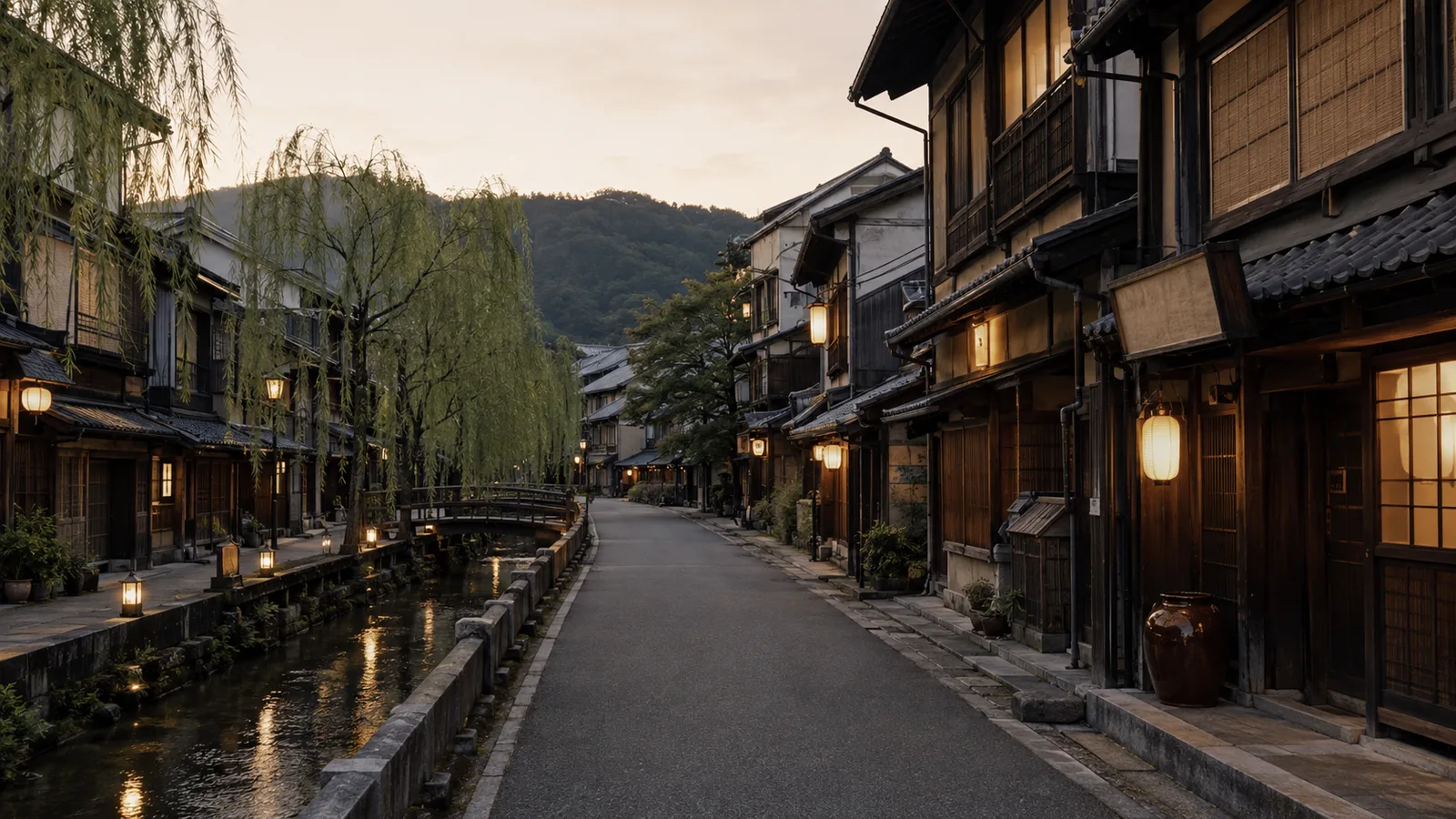
An onsen town is a place built around its hot springs. Japan sits along the Pacific Ring of Fire, so geothermally heated water rises to the surface in many regions, and around the most famous sources, whole towns have grown up: clusters of traditional inns, public bathhouses, and streets where it’s normal to walk between baths in a cotton robe. Water composition varies from one town to the next, described by Japan’s official tourism guide as ranging “from cloudy and milky to smooth and effervescent.”
You don’t have to stay overnight to visit. According to Japan’s official tourism guide, many facilities in onsen towns “specialize in day-use plans or drop-in access for bathing and don’t require an overnight stay,” so a hot-spring town can be a day trip or the centrepiece of a longer stay.
What a visit usually looks like
Most onsen-town trips take one of two shapes:
- An overnight stay at a ryokan. A traditional inn with its own baths, an evening meal, and futon bedding. Our guide to ryokan covers what to expect from a stay in more detail.
- A day visit. Drop-in bathing at a public bathhouse or at a ryokan that opens its baths to non-staying guests during set hours. Useful if you’re passing through or based nearby.
Within either option, you’ll come across a few recurring types of bath: indoor baths, rotenburo (open-air baths, often with a view), and kashikiriburo, a private bath you can reserve for yourself or your group. Japan’s official tourism guide suggests a private or open-air bath as a comfortable starting point for anyone uneasy about shared bathing.
Four onsen towns worth knowing by name
These four come up again and again in English-language travel coverage. They’re starting points for planning, not a ranking, and each has a different character. If you already know you want to narrow it down to one, our guide to choosing between Hakone, Kusatsu, Kinosaki, and Beppu walks through how to decide.
Hakone (Kanagawa)
Hakone sits in the east of Fuji-Hakone-Izu National Park and is, in JNTO’s words, “one of the most popular hot spring towns in Japan.” Its main draw for a first trip is access: JNTO describes it as “an easy day trip from Tokyo,” roughly 90 minutes from Shinjuku on the Odakyu Line, or about 55 minutes by Tokaido Shinkansen to Odawara and then the Hakone Tozan Line. Alongside the baths, the area is known for Lake Ashinoko, a ropeway on Mt. Komagatake, and, in clear weather, views toward Mt. Fuji. There are plenty of options for both day trips and longer stays.
Kusatsu (Gunma)
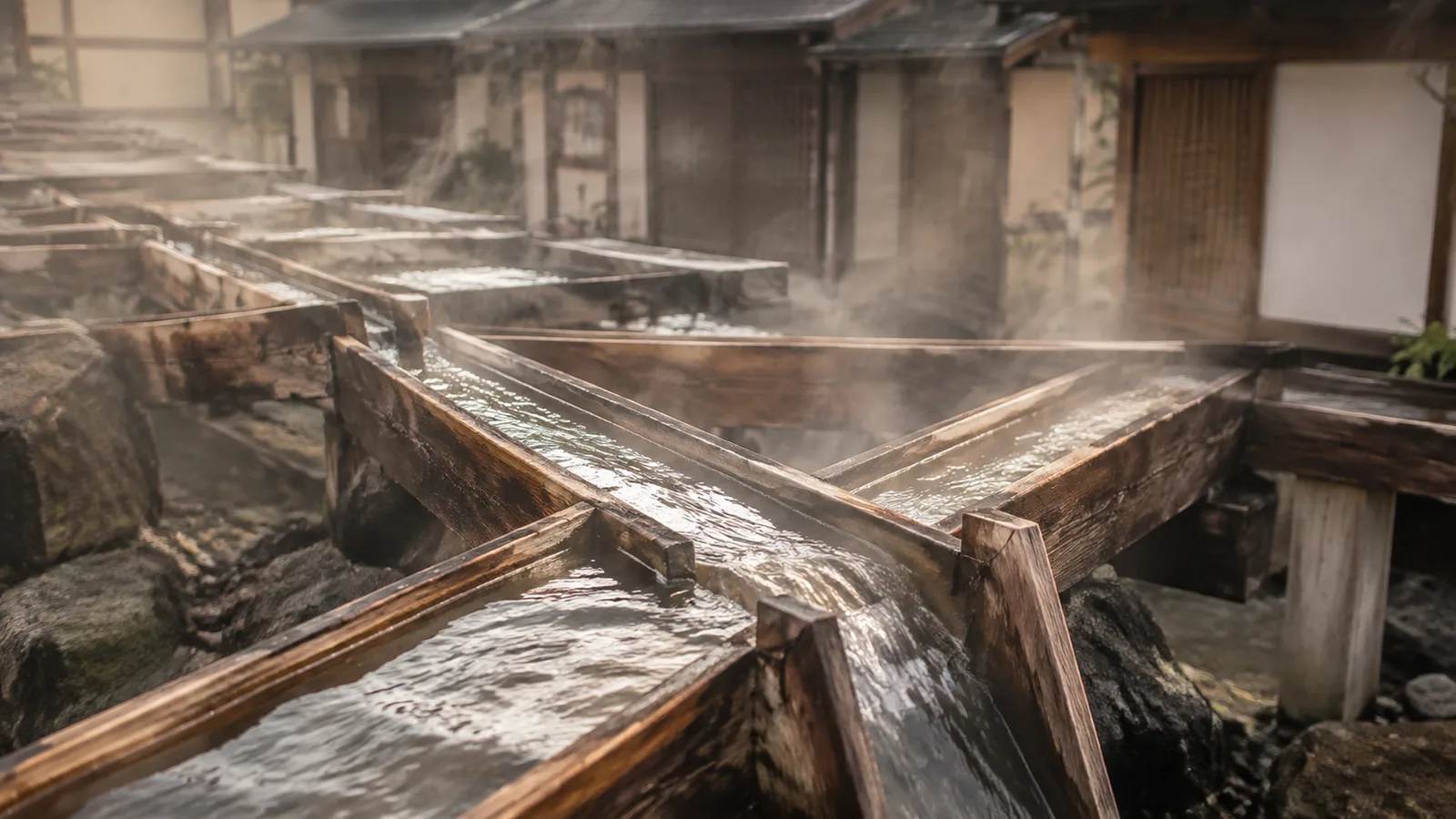
Kusatsu is an inland town about four hours from Tokyo by direct bus from Shinjuku, or roughly three hours by limited express train to Naganohara-Kusatsuguchi followed by a short connecting bus; there’s no train station in the town itself. At its centre is the Yubatake, or “hot water field,” which JNTO calls “the symbol and heart of Kusatsu Onsen”: hot water rises straight from the source and cools as it runs along wooden chutes. JNTO says Kusatsu “has the largest amount of naturally occurring hot spring water in Japan,” with source water around 55°C and high acidity. At Netsunoyu hall you can watch yumomi, a tradition of cooling the water by churning it with large wooden planks in time to a folk song. The water has long been associated with skin care in local tradition; JNTO describes it as “said to” help with many conditions, which is a customary description rather than a medical claim.
Kinosaki (Hyogo)
Kinosaki is a historic hot-spring resort in northern Hyogo, about two and a half hours by direct limited express from Kyoto or Osaka. Its defining feature is soto-yu, seven public bathhouses spread through the town. JNTO notes that “it is not uncommon to see visitors to the area walking around the town in yukata,” moving from one bathhouse to the next in a cotton robe and wooden sandals. Guests staying at a local ryokan can generally use the public baths as part of their stay, and a day pass covering all seven has been available for visitors (JNTO listed it at 1,300 yen as of November 2021; confirm the current price locally). Kinosaki is often described in travel coverage as walkable and traditional, with cherry blossoms in spring and snow in winter.
Beppu (Oita)
Beppu, on the island of Kyushu, is described by JNTO as “a group of eight hot spring towns, each with their own special character,” collectively known as Beppu Hatto. JNTO says there are “close to 3,000 hot spring sources in Beppu City, representing more than 10% of all vents in Japan,” and that the city “boasts the largest volume of hot spring water in Japan.” Beyond ordinary baths, Beppu is known for variety: sand baths where you’re covered in naturally heated sand, steam baths, and the jigoku or “hells,” a set of vividly colored hot springs meant for viewing rather than bathing.
Getting there and choosing a season
Access varies a lot by town. Hakone is the easiest first trip from Tokyo; Kusatsu takes longer and leans on buses; Kinosaki is a Kansai trip from Kyoto or Osaka; Beppu is in Kyushu and usually part of a wider trip through that region. Train and bus times, passes, and ropeway or facility closures change with season and maintenance, so check current routes and opening information on each town’s official tourism site and the relevant railway before you travel.
As for timing, hot-spring towns are a year-round destination. Autumn foliage and winter snow are popular for the contrast with a warm bath, while spring brings cherry blossoms in towns like Kinosaki. Any season works; it mainly changes the scenery and how busy the town feels.
If Hakone is the town you settle on, the first thing you actually buy usually isn’t a bath—it’s the getting around. The Hakone Freepass is one ticket covering unlimited rides on the Tozan Line, the ropeway and the other routes that link the baths, the lake and the museums, which otherwise means a string of separate fares across a day. Two things to know before you book: it’s a transport pass, so bathhouse and ryokan entry is still paid separately, and Klook lists it as not available to Japanese passport holders.
See the Hakone Freepass on KlookThis page contains affiliate links. If you book through them, AHH, JAPAN may earn a commission at no extra cost to you.
Etiquette is the same as anywhere else
Bathing in an onsen town follows the same routine as any Japanese bath: undress fully in the changing area, wash and rinse thoroughly before getting in, keep your small towel out of the water, tie up long hair, and soak quietly without swimming or splashing. Speak softly, and leave your phone outside the bathing area. If any of this feels unfamiliar, our step-by-step guide to sento, onsen, and super sento walks through the whole sequence.
Tattoos and private baths
Some baths in onsen towns accept tattoos, some ask that they be covered, and some don't accept them at all. It's set facility by facility, so check each specific bath or ryokan before you book, and consider a reservable private bath as a backup.
Japan’s official tourism guide notes that some traditional onsen may not accept guests with a tattoo, though it adds that “this is beginning to change,” and suggests looking for tattoo-friendly facilities or booking a private bath. Kinosaki’s seven public bathhouses, for example, are often described in travel coverage as tattoo-friendly, but policies can change and a tattoo-friendly public bath doesn’t mean every ryokan in the same town takes the same view. For how policy breaks down and how to check in advance, see our guide to visiting a Japanese onsen with tattoos.
A gentle note on the water
Different towns describe their water in different ways, and you’ll see traditional claims about what a particular spring is “good for.” These are longstanding local descriptions rather than medical advice, and it’s best to read them that way. Japan’s official tourism guide offers a few practical pointers instead: don’t stay in too long, step out for a drink of cool water if you feel too hot, and avoid alcohol before bathing because it affects your judgment. How long to soak “depends on the temperature of the water and your tolerance for heat.” If you have a health condition that heat could affect, it’s worth checking with a doctor before your trip.
Before you book: a short checklist
- Pick one town and build around it. For a first trip from Tokyo, Hakone keeps travel time short.
- Decide overnight or day-use. A ryokan stay and a drop-in visit are quite different experiences; check which the facility offers.
- Check the bath setup. Shared, reservable-private, open-air, or in-room varies by property.
- Confirm the tattoo policy for the specific bath or ryokan if it applies to you.
- Recheck access and prices on official town and railway sites close to your travel date.
In closing
An onsen town is really just a town that organized itself around its hot water, and visiting one doesn’t need to be complicated. Choose a single town, decide whether you’re staying the night or dropping in, follow the same bath etiquette you’d use anywhere in Japan, and check the details that actually change, like access, prices, and tattoo policy, on official sources close to your trip.
Take it slow. Ahh…
Curious about YUGE, the character guiding you through this site? Meet YUGE—and find a few small ways to bring that calm home—on the YUGE page.
Some editorial images in this article were AI-generated and do not depict specific venues.